
Kaloust Guedel Merges Painting and Sculpture in Four-Decade Artistic Evolution
Los Angeles artist explores cross-disciplinary combinations, pairing canvas work with overlooked sculptural forms to challenge conventional practice.
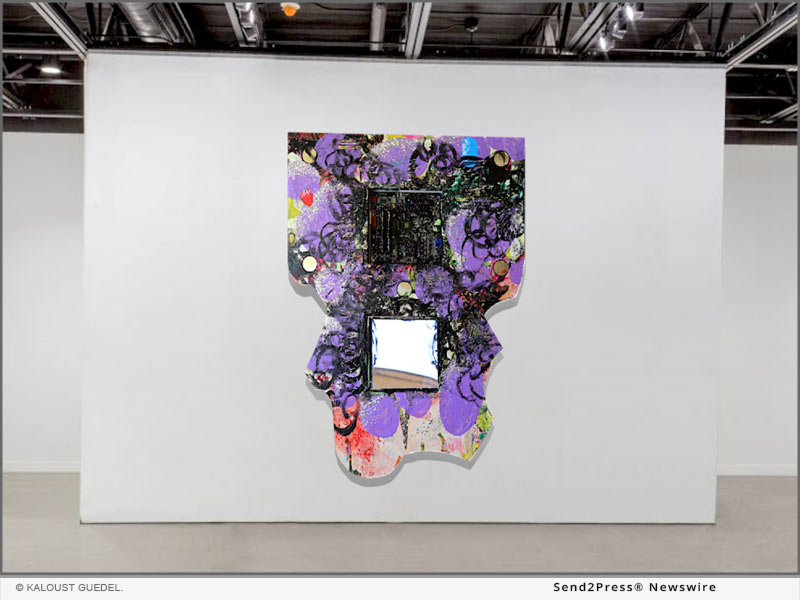
Over four decades, Kaloust Guedel has pursued what he describes as an endless search for resonance across multiple artistic disciplines. His practice has encompassed diverse styles and techniques, each iteration representing another step in an investigation that the artist acknowledges will never reach resolution—a philosophical stance that positions the work itself as process rather than destination.
Guedel's latest conceptual experiment extends this logic into territory that challenges conventional studio hierarchies. Rather than treating painting and sculpture as separate undertakings with distinct outcomes, he has begun deliberately combining works across mediums—pairing a recently completed painting with a sculptural piece that he himself does not particularly value. This deliberate coupling of a favored work with one he views with ambivalence inverts typical curatorial or collection-building logic, which tends to valorize works the artist wishes to preserve.
The approach reflects broader methodological questions that have animated contemporary art discourse since the postwar period: whether artistic intentionality should determine a work's ultimate presentation, whether subjective assessment by the maker carries authoritative weight, and how meaning emerges through juxtaposition rather than individual formal properties. By uniting disparate objects regardless of his own aesthetic judgment about them individually, Guedel creates potential for viewers to construct alternative readings—ones not predetermined by the artist's preferences.
This strategy aligns with conceptual practices that have gained particular prominence since the 1990s, when artists increasingly questioned the romantic notion of the unified artistic vision. Rather than presenting work that represents a singular aesthetic position, Guedel's method acknowledges contradiction and ambivalence as generative principles. The pairing creates productive friction: viewers encountering the two works must negotiate competing formal languages and the artist's stated lack of attachment to one component.
The Los Angeles-based artist's willingness to exhibit work he considers unsuccessful alongside pieces he values marks a shift in how contemporary practitioners engage with the archive of their own production. Where mid-twentieth-century modernism often championed the destruction of failed experiments, Guedel's approach treats even unsuccessful attempts as material worthy of sustained engagement. This reflects evolving attitudes toward artistic failure within institutional and curatorial frameworks, where the concept of the unrealized or partially realized work has become increasingly conceptually rigorous rather than merely documentary.
Guedel's four decades of investigation suggest that artistic development need not follow linear improvement. Instead, his practice models a more cyclical relationship with materials and forms, where technique serves as a vehicle for perpetual questioning rather than mastery. As institutional interest in process-based and non-finalized work continues expanding, artists working in this register may find their approaches increasingly aligned with contemporary curatorial priorities.