Chelsea Gallery Hosts Dystopian Political Sculpture Exhibition Featuring Daniel Edwards Wo
"Opposing Visions: The Trump Era in Art" opens May 26 in New York with monumental piece exploring themes of technology and power
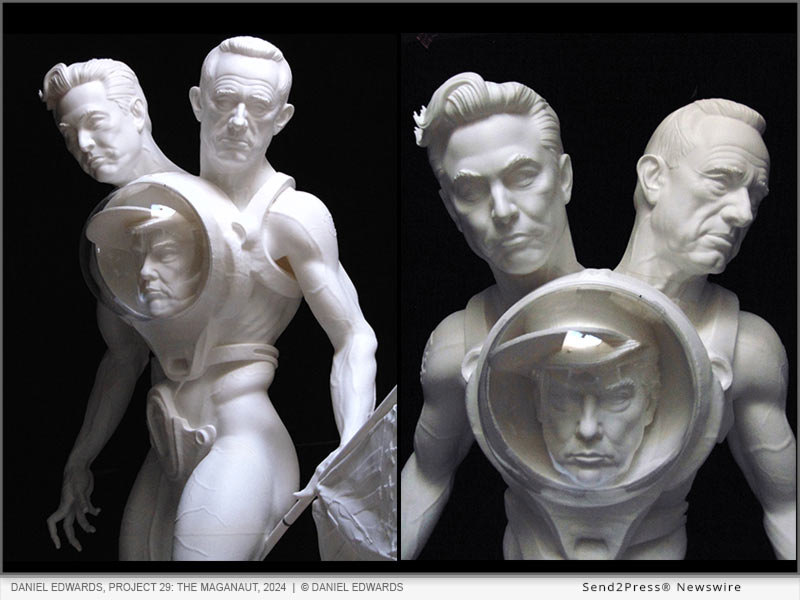
A six-day exhibition opens this month in Manhattan's Chelsea Gallery District with work that interrogates contemporary American politics through the lens of speculative sculpture. "Opposing Visions: The Trump Era in Art" presents "Project 29," a monumental work by sculptor Daniel Edwards that engages with themes of biotech, ideology, and spectacle in ways that position art as a vehicle for political commentary.
The show runs from May 26 through May 31, 2025, with programming scheduled throughout the week. Edwards's contribution to the exhibition frames itself as an exploration of political possibility rather than electoral prediction, using the formal language of monumental sculpture to interrogate how power, technology, and collective imagination intersect in contemporary culture.
The Chelsea location carries particular weight within New York's art infrastructure. The neighborhood has long served as a testing ground for ambitious curatorial projects that blur boundaries between gallery contexts and public discourse. By situating work of this nature within a commercial gallery setting, the exhibition positions itself within established art-world channels while engaging with content typically reserved for political commentary.
Edwards has previously worked with provocative subject matter that challenges viewers to confront the relationship between celebrity, politics, and artistic representation. His practice frequently employs hyperbolic formal strategies to generate productive discomfort, using scale and spectacle as tools for critical engagement rather than mere aggrandizement.
The framing of the exhibition—"Opposing Visions"—suggests an intentional pluralism within the curatorial approach, though the centerpiece's focus on a specific political scenario indicates a particular angle of critique. This curatorial gesture reflects broader patterns within contemporary art of engaging directly with political material, a shift from earlier decades when such engagement was often considered incompatible with aesthetic rigor.
As American political discourse continues to absorb increasingly speculative and science-fictional dimensions, institutions and artists are investigating how art might function as a space for imagining alternative political futures or interrogating the stakes of present arrangements.