
17-foot sculpture marks reopening of Florida community center honoring King's legacy
George Gadson Studios unveils 'Legacy in Motion' at rebuilt Dr. Martin Luther King, Jr. Recreation Center in Panama City
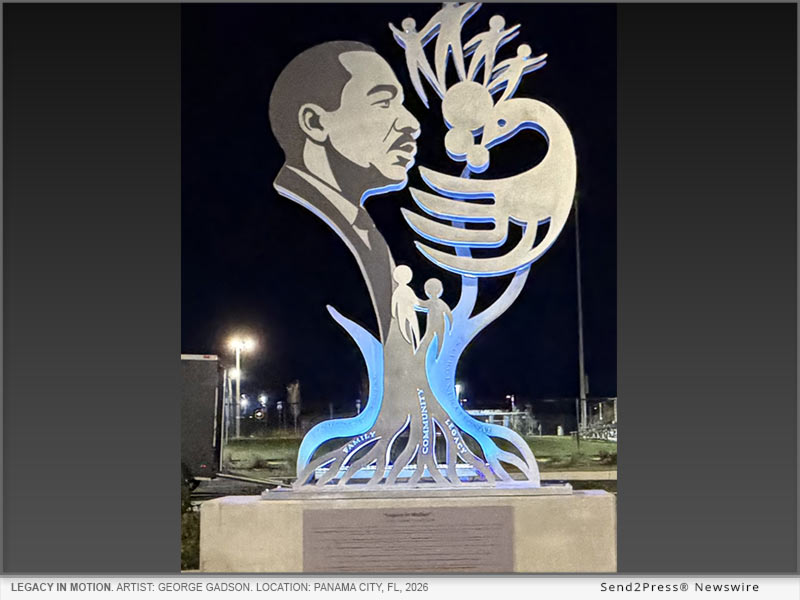
A 17-foot sculpture titled Legacy in Motion now anchors the newly reconstructed Dr. Martin Luther King, Jr. Recreation Center in Panama City, Florida, following the facility's January 16 opening. Commissioned for the Glenwood Community, the work by George Gadson Studios addresses themes of historical reflection, community resilience, and purposeful advancement through its scale and placement within the civic space.
The sculpture arrives as public institutions across the United States continue examining how commemorative and community-centered artworks can function beyond symbolic gestures. The recreation center itself represents substantial investment in urban infrastructure renewal, with the sculpture serving as both artistic intervention and architectural anchor for the site. Such projects raise questions about the relationship between public art, community identity, and institutional renewal that curators and planners internationally have engaged with over the past two decades.
George Gadson Studios has positioned the work within a broader conversation about how contemporary sculpture can negotiate between historical weight and forward-looking civic purpose. The timing of the unveiling—synchronized with the center's opening rather than delayed—suggests an intentional curatorial strategy: art as concurrent partner in community infrastructure rather than retroactive commemoration. This approach reflects shifts in how municipalities approach public commissioning, particularly in projects addressing historical inequities or community reinvestment.
The recreation center's reconstruction itself signals changing priorities in how American cities allocate resources toward neighborhood facilities. Named for Dr. Martin Luther King, Jr., the facility carries historical and symbolic significance within Panama City's urban landscape. By pairing the rebuilt infrastructure with contemporary sculpture, stakeholders have attempted to create a site that addresses both present community needs and historical consciousness.
Public art installations of this scale and institutional prominence typically undergo lengthy vetting processes involving community input, municipal oversight, and artistic consultation. The integration of Legacy in Motion into an opening-day ceremony suggests coordination across multiple institutional actors—municipal government, recreation departments, arts organizations, and local constituencies—all negotiating the artwork's role and meaning.
As American cities continue evaluating how public spaces can simultaneously serve practical community functions and engage critically with history, projects like this one in Panama City offer case studies in how contemporary sculpture navigates those dual demands. The sculpture's permanence at the site will likely shape how the Glenwood Community experiences both the recreation center's renewed role and its connection to broader narratives about progress and collective memory.